

Life in Rancho Santa Fe.
Comfort built around your home.
Rancho Santa Fe lies inland from the North County coast. Visit California describes an upscale community where homes may sit alongside orchards and golf courses. The inland location is important context: the same source notes that weather is not identical across coastal and inland San Diego County. A system should be selected for the property’s actual needs rather than a general assumption of mild beach weather.
Where a property has multiple systems, separate wings, or an occupied guest space, document which equipment serves each area. Different schedules can make controls and zoning worth discussing, but zoning is not automatically appropriate for every duct system. Larger grounds may also make the route to equipment and gate-access arrangements relevant to a visit.
The local setting
These places provide geographic context, not a list of completed projects or confirmed service boundaries. Coverage is reviewed using your full address and service needs.
Visit California · Inland North County
Coordinated comfort across spaces with different needs
Share the number of systems, any room-specific temperature concerns, and how frequently each space is used. A proposal should distinguish the systems being replaced from those staying in service, describe controls and compatibility, and explain commissioning. Confirm property access separately; submitting an inquiry does not arrange a visit or establish local coverage.
Heating, cooling, and the right next step
AC repair
Warm air, weak airflow, unexpected noise, and short cycling need a diagnosis. A check of controls, airflow, coils, and operating conditions helps identify the cause rather than guessing at parts.
Explore ac repairHeating repair
Furnace and heat pump concerns involve different equipment and safety checks. Explain whether the system will not start, runs without warming the home, or leaves only certain rooms cold.
Explore heating repairHeat pumps & replacement
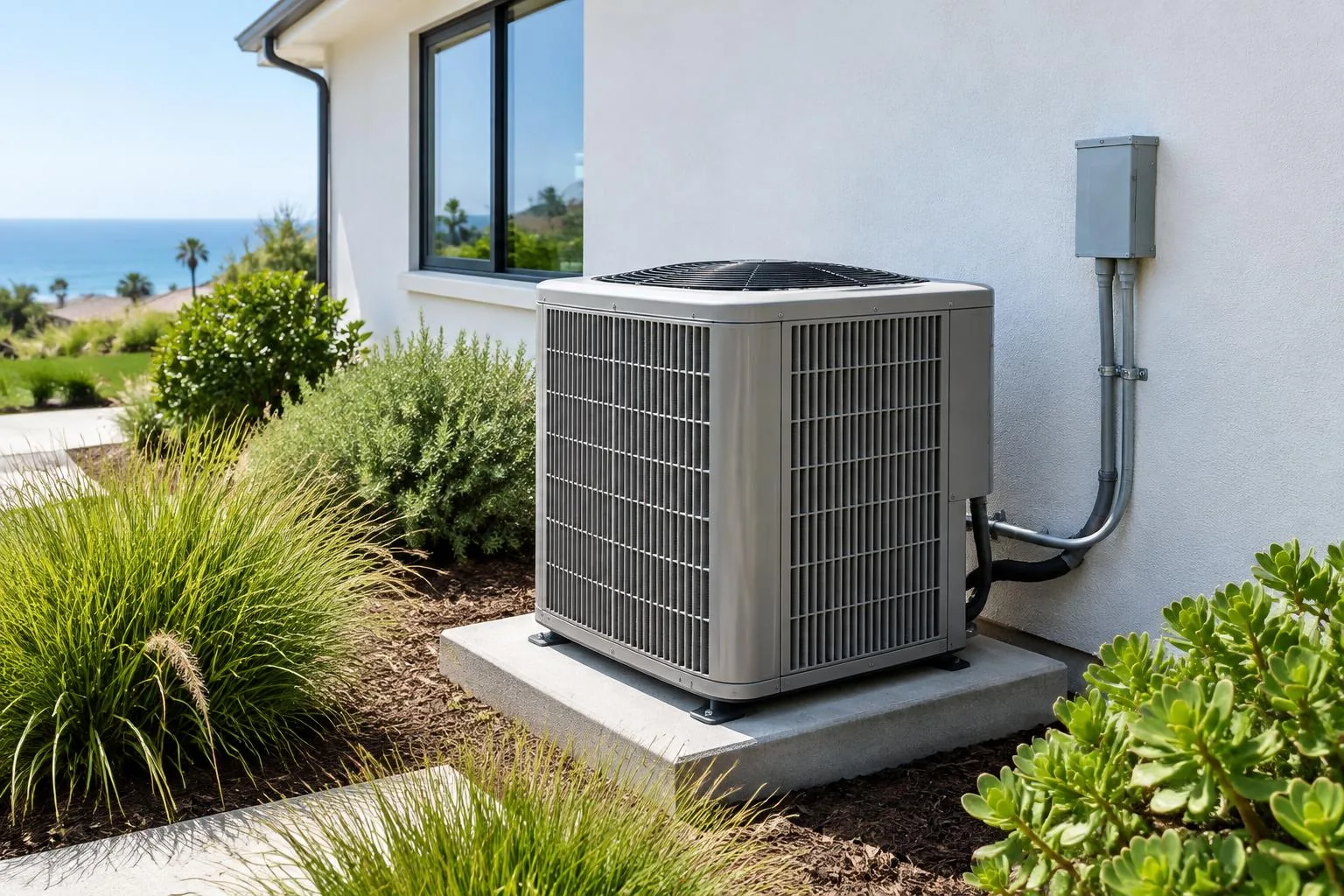
A heat pump can provide both heating and cooling. Compare home requirements, existing ducts, electrical capacity, placement, and controls before choosing equipment or assuming an all-electric conversion is straightforward.
Explore heat pumps & replacementDuctless & room-by-room comfort
A ductless system can be considered for an addition or a space without usable ducts. Indoor-unit appearance, line routes, drainage, electrical requirements, and maintenance access belong in the discussion.
Explore ductless & room-by-room comfortPreventive maintenance
Follow manufacturer guidance for filter care and professional inspections. Agree on a written checklist suited to your system and exposure. Maintenance supports reliable operation but does not guarantee against a breakdown.
Explore preventive maintenanceWhat a careful home assessment considers
Home size is only one input. A useful assessment considers insulation, windows, orientation, occupancy, room use, existing ductwork, return-air paths, equipment condition, and available electrical capacity. Rooms that are uncomfortable at different times of day can reveal a distribution or solar-gain issue that a larger unit would not necessarily fix.
For replacement work, ask how equipment is sized, what remains from the existing system, and how the completed installation will be checked. Model numbers, the written scope, duct or electrical changes, placement, applicable permits, removal of old equipment, and actual warranty terms should be clear before work is authorized. No rebate, savings amount, or price is promised here.
Preparing for a service conversation
- Share your address and ZIP code so coverage can be checked.
- Describe the equipment type, symptoms, and when the issue began.
- Note the rooms affected, thermostat settings, and recent renovations.
- Provide model information and maintenance history if readily available.
- Mention gate access, stairs, roof access, shared exterior areas, or parking constraints.
- Confirm the diagnostic fee, agreed scope, and appointment details separately.
Do not open electrical panels, handle refrigerant, bypass safety controls, or attempt gas repairs. If you smell gas or a carbon monoxide alarm sounds, leave the property and contact emergency services or your utility rather than waiting for an HVAC appointment.
Clear coverage. Clear expectations.
Rancho Santa Fe remains a candidate service area pending operational approval. This guide does not claim a local office, past project, guaranteed arrival time, or availability for every address. The team must confirm coverage and the work requested. A submitted appointment request is not a booking.
Local context is based on the source linked above. General equipment guidance can also be found through the U.S. Department of Energy. Educational HVAC guidance is pending contractor review.